Service hours don't impress anyone. Real work does.
The Gateway Method matches students with vetted community organizations for co-designed projects that produce real outcomes. Real results for organizations. Real growth for students. Documented evidence for schools, parents, and college applications.
Service requirements don't teach.
Real projects do.
Nearly every high school requires community service, and the intent is real. Service is meant to build empathy, leadership, and the kind of agency and future-ready skills that classrooms can't teach on their own.
The execution isn't. Matching is informal, scaffolding is missing, and outcomes go undocumented, so students log hours instead of growing from them, and admissions readers, who see thousands of padded activity lists every cycle, can tell the difference immediately.
One student. One project.
Measurable outcomes.
Discover
Students complete a structured assessment that maps interests, skills, and growth goals to three deeper learning competencies drawn from Mehta and Fine’s Harvard research: mastery, identity, and creativity.
Match
Each student is paired with a vetted community partner whose actual operational needs align with what the student wants to develop. Every match is hand-curated. It isn't assigned from a list, it's built from a real conversation about fit on both sides.
Co-design
Student and partner sit down together and scope a real project. The co-design tool surfaces the tensions between what the student wants to learn and what the organization actually needs, turning that conversation into a structured project brief both sides commit to.
Document
Weekly reflections, competency tracking, partner feedback, and a final narrative report all turn real work into evidence that schools, parents, and college admissions committees can actually use.
Service learning usually ends with a placement.
Gateway begins there.
Our co-design tool keeps going, guiding the student and the organization through the project they'll actually do together, the outcomes they'll both work toward, and the brief that anchors the partnership. Both sides end with something measurable.
Walk through it →Real projects, guided end to end.
I work with a small number of students at a time, taking each one through the full Gateway Method: from discovering what they actually care about, to a hand-curated match with a community organization, to a co-designed project with real stakes, to documentation that carries weight in a college application. Every engagement includes weekly 1:1 mentorship with me, and because I keep the roster small, every student gets a project scoped to them rather than a program they're slotted into.
- —Structured placement with a vetted community partner
- —Weekly 1:1 mentorship with the founder
- —AI-scaffolded co-design and reflection tools
- —Competency tracking across three growth dimensions
- —Final narrative report for schools and college applications
Every engagement starts with a conversation about your student: where they are, what they care about, and whether this is the right fit.
Get in Touch →Built with the organizations
actually doing the work.
Community partners join Gateway free of charge. Each is vetted for safeguarding standards, project-readiness, and fit, and each placement is scoped around a real operational need, so the organization gains as much as the student does.
What partners get →Built from lived experience.
Designed for real outcomes.
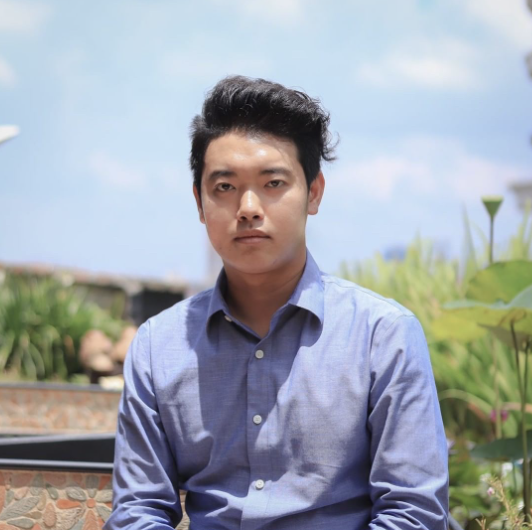
I'm a Saigon South International School graduate. Junior year, I spent Saturdays teaching English at orphanages around Ho Chi Minh City. I had no curriculum, no continuity, no way to measure whether any of it stuck. By the end of the year, I knew the answer: it hadn't.
Senior year, I tried something else. A few classmates and I started a club called Bliss 4 Youth that worked with the children of our school's local staff. We met weekly, built a real curriculum, and tracked progress over the year. Every student left with improved English.
That's the difference Gateway is built to scale. The platform is grounded in deeper learning research from my studies at Harvard's Graduate School of Education with Jal Mehta, whose framework defines what mastery, identity, and creativity actually look like in young people.
That's the method I now bring to students in the Bay Area, one real project at a time. Based in the San Francisco Bay Area · LinkedIn · long_trinh@gse.harvard.edu